GenAI.mil and the Surrender of the Clock
::: captioned-image-container
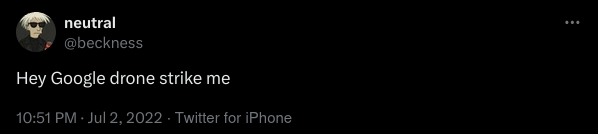
I thought it was a joke. Turns out it was foreshadowing.
On December 9th, 2025, Pentagon Chief Technology Officer Emil Michael announced that “by the end of this week, 3 million employees, warfighters, and contractors are going to have AI on their desktop, every single one.” The platform is GenAI.mil, and it runs on Google Cloud’s Gemini for Government.
“We are pushing all of our chips in on artificial intelligence as a fighting force,” Defense Secretary Pete Hegseth declared. “The department is tapping into America’s commercial genius.”
Emil Michael added: “AI is America’s next Manifest Destiny, and we’re ensuring that we dominate this new frontier.”
They used a gambling metaphor and invoked Manifest Destiny while announcing operational dependency on a single vendor. The rhetoric is doing spectacular work here.
Google CEO Sundar Pichai framed it slightly differently: “Through this deployment of Google Cloud’s Gemini for Government offering, more than 3 million civilian and military personnel will be able to access the same advanced AI that businesses use every day to drive administrative efficiency and greater business productivity.”
Military command infrastructure as business productivity software. Gmail for warfare.
Strip away the press release language about “unleashing” and “lethality” and “putting the world’s most powerful frontier AI models directly into the hands of every American warrior,” and here’s what GenAI.mil actually is:
A Google Cloud tenancy with a DoD decal.
Not “frontier AI.” Not “warfighter augmentation.” Not “operational superiority.”
It’s inference as a service, running on Google’s infrastructure, through Google’s APIs, wrapped in a .mil domain that makes it look like a weapons platform instead of what it actually is: a SaaS contract with extra steps.
“It’s a force multiplier,” Michael explained. “As we’ve seen in our consumer lives, AI can change the way you do things.”
Consumer lives. They’re framing military command infrastructure adoption using Gmail as the reference point.
The actual topology is straightforward:
Model inference runs on Google hardware
Via Google-controlled APIs
Wrapped in a DoD-branded interface
With outputs “web-grounded against Google Search to ensure outputs are reliable and dramatically reduces the risk of AI hallucinations”
With uptime, scaling, rate limits, and model behavior governed by a vendor whose primary business is advertising and whose incentive structure has nothing to do with warfighting
This is the substrate.
The tell is right there in the architecture: GenAI.mil is built around a single Google-controlled AI cloud, making U.S. commanders operationally dependent on one private vendor’s uptime, security posture, and business decisions.
This isn’t an adoption of technology. It’s a surrender of infrastructure control dressed up as modernization.
And they’re doing it at scale, immediately. Three million users by the end of the week. Not a pilot program. Not a phased rollout with evaluation periods. Full deployment across the entire DoD workforce in days.
The platform went down almost immediately after the announcement. “Couldn’t even handle the general population we broke it in under an hour and u wanna pretend this is gonna stand up against state actors,” one commenter noted. Pentagon officials later insisted the site was “working as intended.”
This is the infrastructure they’re betting military command coherence on.
Let me walk you through what operational dependency on a commercial cloud vendor actually means:
If Google has an outage, GenAI.mil goes down. If Google throttles inference, tactical commanders lose access. If Google deploys a safety patch that changes model behavior, warfighter tools change without DoD control. If Google’s security posture changes, DoD inherits the new threat model.
Notice the structure here. These aren’t edge cases. They’re the normal operational realities of depending on someone else’s infrastructure.
And here’s the key point: the U.S. military’s command-and-control stack now inherits that behavior. Not “might inherit.” Does inherit. Immediately. By design.
This is vendor dependency, yes, but it’s a specific and particularly dangerous form: temporal dependency. When Google’s operations tempo changes, GenAI.mil’s availability changes. When Google’s priorities shift, the roadmap shifts.
You cannot maintain operational independence when your operational capacity is downstream of someone else’s maintenance schedule.
Every complex system runs on a stack of timescales: long-horizon strategy, mid-horizon operations, short-horizon tactics, and real-time execution. Control depends on slower layers setting constraints for faster ones. When a faster external system—especially a commercial platform—dictates the timing, the hierarchy collapses. I call this Δt: the mismatch between the timescale you think you command and the one you actually depend on.
This is where we need to get precise about what’s actually broken here, because “vendor lock-in” doesn’t capture the severity of the architectural failure.
Traditional military command and control depends on nested temporal layers with clear hierarchical separation:
Strategic (years): Force structure, doctrine, capability development
Operational (months): Campaign planning, theater logistics
Tactical (days/hours): Unit maneuvers, mission execution
Engagement (seconds): Direct action, weapons employment
Each layer sets constraints for the faster layer below it. Each can degrade independently without collapsing the entire stack. This temporal separation is why military organizations can function across massive timescale differences.
GenAI.mil breaks this hierarchy completely:
Strategic decisions → bound to Google’s infrastructure lifecycle and business model evolution
Operational tempo → bound to Google’s maintenance windows and uptime guarantees
Tactical execution → bound to Google’s API stability and rate limiting
Engagement timing → bound to Google’s inference latency and availability
Every timescale in the DoD stack is now downstream of a faster external timescale that the DoD does not govern and cannot slow, pause, or override.
This is temporal subordination masquerading as modernization.
Here’s the failure condition in one sentence:
A slower layer cannot coherently command a faster layer when both are dependent on an even-faster external clock it does not control.
This is Δt collapse at the architectural level. The control hierarchy has been inverted.
Google is optimizing for quarterly revenue, infrastructure efficiency, and cloud market share. The Pentagon is trying to optimize for national defense and strategic deterrence. These are not compatible optimization targets, and they don’t operate on compatible timescales.
When the substrate sets the tempo, you’re not the one in command.
Now look at the language in the announcement. “Unleashing.” “Most powerful frontier AI models.” “More lethal than ever.” “World’s best technology.”
The rhetoric is doing enormous compensatory work here.
This is a pattern I’ve been tracking across multiple institutions: when you lose control of your operational foundation, you produce increasingly intense narratives about your effectiveness. The capability claims get louder as the actual control diminishes.
“Lethality” here functions as branding, not description. It’s a claim about battlefield effectiveness being used to mask a decision about infrastructure dependency.
Notice what’s not in the press release: any discussion of the actual control topology. No mention of dependency architecture. No acknowledgment of the temporal subordination being constructed. Just “frontier AI” and “warfighter advantage” and “lethality.”
The empire isn’t gaining a force multiplier here. It’s accepting subordination while narrating it as innovation.
The fundamental mistake here is conceptual, not just operational.
This isn’t a critique of military use of AI; it’s a critique of outsourcing the tempo to commercial infrastructure.
The DoD believes it has acquired “AI capability.” What it has actually acquired is operational dependency structured as temporal subordination.
These are not the same thing.
When you buy a weapons system, you own the system. You control maintenance, deployment, doctrine, rules of engagement. The system is subordinate to your operational tempo and strategic priorities.
When you subscribe to a cloud service, you’re accepting someone else’s tempo. You operate on their infrastructure, according to their SLAs, shaped by their business model. You’re not buying capability, you’re renting access, and access can be modified, throttled, repriced, or revoked according to the vendor’s priorities.
Hegseth keeps emphasizing that “all of it is American-made.” The hardware is in Google datacenters. The models are Google’s. The APIs are Google’s. The uptime is Google’s. The maintenance windows are Google’s. But sure, it’s “American-made” because the company is headquartered in Mountain View.
This isn’t even a novel problem. Every mid-market enterprise that’s gone all-in on a single cloud vendor has discovered this the hard way. You think you’re modernizing, but you’re actually accepting a new kind of dependence that you can’t see until something breaks.
The difference is that when Salesforce has an outage, a sales team misses quota. When Google Cloud has an outage under this architecture, tactical commanders lose access to decision-support infrastructure in theater.
And here’s the thing: this was avoidable. The DoD could have built internal AI infrastructure. It would have been slower, more expensive, harder to scale. But it would have been theirs. They would have controlled the tempo, owned the risk, maintained the sovereignty.
Instead, they chose speed and convenience. They outsourced the substrate and kept the interface. They traded control for access.
This is the SaaS-ification of state capacity playing out in real time. The state sheds technical competence, becomes a customer of platform infrastructure, then loses the ability to recognize the dependency as a vulnerability.
When the substrate sets the tempo, you’re not the one in command.
The DoD just announced that Google sets the tempo now.
Empires usually erode invisibly. The loss of capability is gradual, the surrender of sovereignty happens in small increments, the institutional decay unfolds over decades in ways that are only obvious in retrospect.
But occasionally, the erosion is announced on video with a glossy press release and a professionally produced announcement from the Secretary of Defense.
This is one of those times.
The U.S. military just publicly declared that it has made its command-and-control infrastructure operationally dependent on a private advertising company’s cloud services, and framed this dependency as a capability enhancement.
This is institutional Δt collapse happening in plain sight. The temporal hierarchy has inverted, the control topology has been surrendered, and the institution is celebrating the transition as innovation.
There’s no external force causing this. No adversary imposed this architecture. This is voluntary subordination, announced with pride.
The tell was there three years ago, in a throwaway tweet that felt like absurdist humor: “Hey Google drone strike me.”
In 2022, I thought the joke was that Google might drone strike me.
In 2025, the joke is that the Pentagon might ask Google for permission first.